


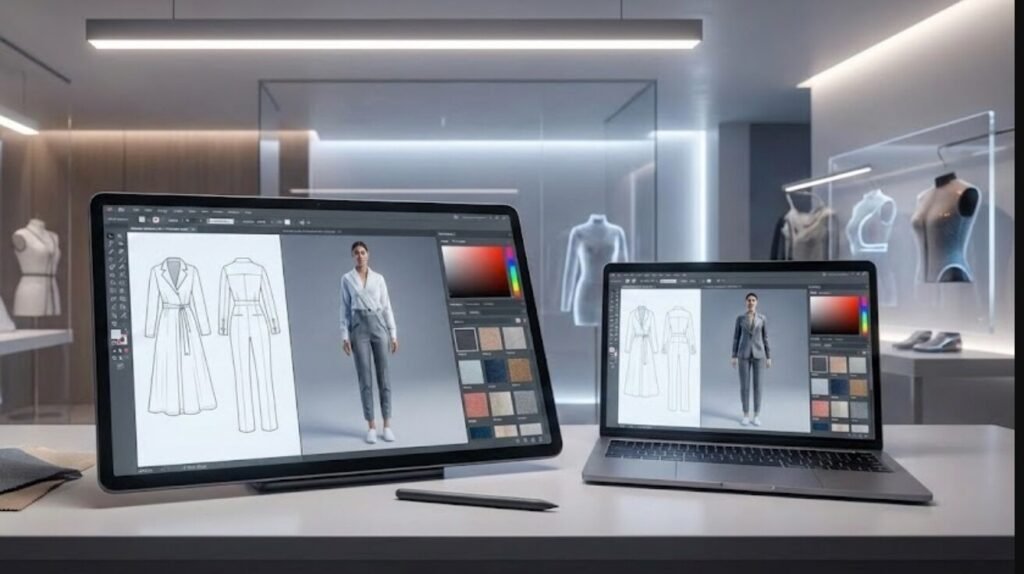
More than 65% of fashion companies globally have adopted digital design platforms or computer‑aided design software to streamline operations and reduce product development time.
Imagine creating a stunning fashion collection without ever touching a sketchpad or fabric. In the current tech-driven world, apps for designing clothes are revolutionizing the way designers bring their visions to life.
From intricate digital patterns to lifelike 3D garment simulations, these tools empower creativity like never before. They streamline workflows, enhance precision, and allow designers to experiment boldly without limits.
For entrepreneurs and developers aiming to tap into this booming niche, mastering the features, technical requirements, and user experience of top fashion design apps is essential before diving into mobile app development.
Top Features of Leading Apps for Designing Clothes
When examining the best apps for designing clothes, certain features consistently stand out. These features enhance usability, creativity, and functionality, providing users with a comprehensive design environment.
- Intuitive Sketching Tools: Modern fashion design apps incorporate vector-based drawing tools, stylus support, and precision grids. Designers can effortlessly create intricate clothing patterns, add textures, and experiment with color palettes in real time.
- 3D Visualization & Rendering: Advanced apps offer 3D garment simulations, enabling designers to visualize their clothing on virtual models. Realistic fabric draping, lighting, and movement simulations help bridge the gap between concept and production.
- Pattern Making & Measurement Integration: Accurate measurements are critical in fashion. Top apps allow designers to generate digital patterns that can be exported for manufacturing, ensuring consistency and reducing errors.
- Collaboration & Cloud Storage: With cloud-based platforms, design teams can collaborate seamlessly. Users can share sketches, mockups, and feedback in real time, regardless of their location, which is especially relevant for global design teams.
- Material Libraries & Color Palettes: Pre-loaded libraries of fabrics, textures, and color schemes save time while maintaining design consistency. Designers can also customize materials to match specific client requirements.
These features are essential benchmarks when planning a custom fashion design app that stands out in a crowded market.
The global market for fashion design software is estimated to be USD 41.57 billion in 2025, and is projected to grow to USD 70.82 billion by 2035, a compound annual growth rate (CAGR) around 8.6%.
How to Build a Fashion Design App From Scratch
Building a high-quality fashion design app requires a blend of technical expertise, market research, and user-focused design. Below is a step-by-step approach:
Market Research and Ideation
Before development begins, conduct thorough market research to identify gaps in existing apps. Analyze competitor apps, understand target user preferences, and define the core value proposition of your app.
Define Core Features
Focus on functionality that adds value to designers. Essential modules may include digital sketching, 3D garment simulation, fabric libraries, pattern generation, and user collaboration tools. Incorporating features like AI-powered trend suggestions can provide a competitive edge.
UI/UX Design
The user interface should be intuitive and visually appealing. Incorporate drag-and-drop tools, gesture-based navigation, and customizable workspaces. Since designers prioritize creativity, the UI must be non-restrictive yet efficient.
Technical Stack & Development
Choosing the right tech stack is critical. For iOS, Swift ensures smooth performance, while Kotlin or Java is preferred for Android apps. Frameworks like Flutter can allow cross-platform deployment with high performance. Integrate cloud services, 3D rendering engines, and secure databases to handle user data efficiently.
Testing & Quality Assurance
Thorough testing ensures stability, performance, and usability. Focus on compatibility across devices, accurate rendering of designs, and seamless collaboration features. Beta testing with actual designers provides valuable insights for refinement.
Launch and Marketing
Post-launch, digital marketing, app store optimization, and influencer partnerships can drive adoption. Highlight the app’s unique selling points and technical capabilities in campaigns targeting fashion professionals.
For startups and entrepreneurs seeking expert guidance, companies specializing in mobile app development in UK, like 8ration, offer end-to-end services from ideation to launch, ensuring robust, scalable, and user-centric applications.
Popular Examples of Apps for Designing Clothes
Several market leaders inspire new entrants. Applications like Clo3D, Adobe Illustrator Fashion templates, and CorelDRAW Fashion are widely used by designers globally.
These apps combine high-fidelity 3D modeling, pattern-making tools, and collaboration features to deliver comprehensive solutions. Drawing insights from these platforms helps identify essential features and gaps that your custom app can fill.
“The future of creativity lies at the intersection of technology and human imagination; fashion design apps are proving that every idea can become tangible.” – Mark Zuckerberg, CEO at Meta.
Final Thoughts!
The demand for innovative apps for designing clothes continues to rise as fashion embraces digital transformation. By understanding the essential features, technical frameworks, and user expectations, entrepreneurs and developers can craft apps that empower designers and streamline the creative process.
From 3D modeling to collaborative workflows, building a fashion design app from scratch requires careful planning, strategic execution, and a focus on user-centric solutions. With expertise from experienced partners in mobile app development in UK, such as 8ration, turning your app idea into a successful product is not only achievable but also highly rewarding.
In summary, leveraging advanced technologies, integrating designer-friendly tools, and prioritizing seamless UX are key to developing a standout fashion design app that can redefine how clothing is conceptualized and produced in the digital age.
Want more to read? Visit dDooks.
