


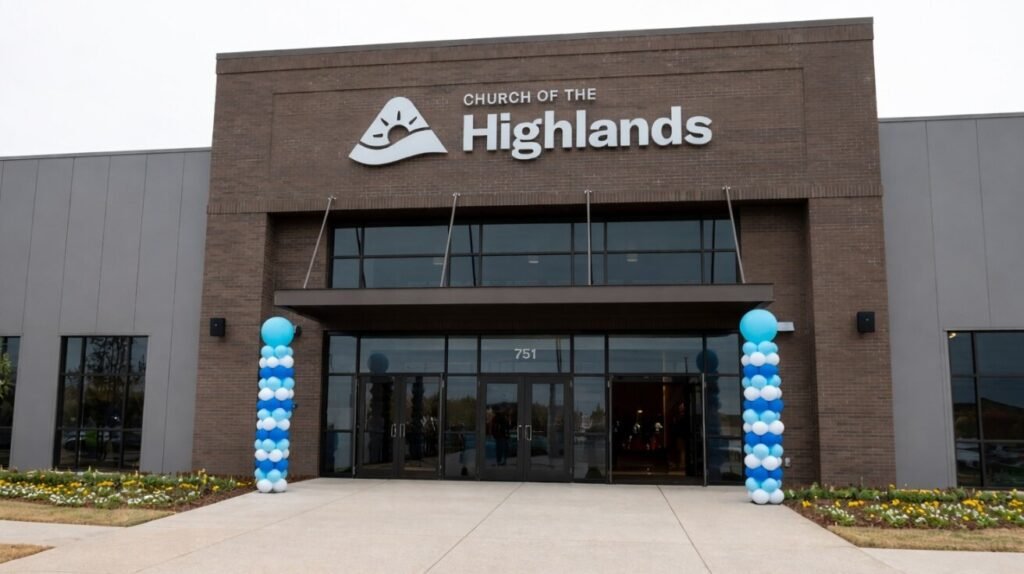
The phrase church of the highlands exposed has become a highly searched topic as more people question the power, influence, and accountability of modern megachurches. When a church grows to tens of thousands of attendees, spans multiple campuses, and influences national church-planting movements, scrutiny is inevitable. Some people search this phrase out of genuine concern, others out of personal experiences, and many simply want to understand what is factual, what is alleged, and what is misunderstood. This article takes a careful, informative approach to the topic, aiming to present context, documented events, criticisms, and responses without sensationalism. The goal is clarity, not shock value.
What Is Church of the Highlands?
Church of the Highlands is a large non-denominational evangelical church based in Alabama that began in the early 2000s. From a small launch team, it expanded rapidly into a multi-campus organization with locations across Alabama and neighboring states. Its growth model, emphasis on small groups, volunteer culture, and modern worship style became influential nationwide. The church is often cited as a model for rapid expansion, leadership training, and streamlined church operations. Supporters see it as effective and spiritually impactful, while critics argue that such scale can create risks related to oversight, transparency, and power concentration.
Why the Term “Church of the Highlands Exposed” Is So Popular
When people search church of the highlands exposed, they are rarely looking for a single incident. Instead, they are often seeking a broader picture that includes controversies, leadership decisions, cultural dynamics, and institutional accountability. The word “exposed” reflects a wider trend in which religious institutions are increasingly examined through investigative journalism, social media commentary, and firsthand testimonies. In many cases, this search reflects distrust of large institutions rather than a confirmed scandal, making it especially important to separate verified facts from speculation.
The 2020 Social Media Controversy and Public Fallout
One of the most frequently referenced events in discussions about church of the highlands exposed occurred in 2020. During a time of heightened racial tension in the United States, public attention focused on social media activity connected to senior leadership. Screenshots circulated online, and the resulting backlash led to strained relationships between the church and certain community partners. Some public institutions chose to sever or reconsider their ties, and the church faced widespread criticism. While leadership issued apologies and statements emphasizing reconciliation, the incident left a lasting impression and remains a cornerstone of online discussions about the church’s values and public responsibility.
Leadership Structure and Concentration of Authority
A recurring theme in church of the highlands exposed discussions involves governance. Like many non-denominational megachurches, Church of the Highlands operates without traditional denominational oversight. Decision-making authority is concentrated among senior leadership and internal boards. Supporters argue this allows efficiency and unity of vision, while critics warn that such structures can limit accountability. When authority is centralized, even small leadership failures can have widespread consequences, and critics believe this model increases the risk of unchecked power.
The ARC Connection and Why It Matters
Church of the Highlands is closely associated with the Association of Related Churches, often referred to as ARC, a church-planting network that has helped launch hundreds of churches across the country. This connection is central to many church of the highlands exposed narratives. While ARC has facilitated rapid church growth, it has also been linked in media reports and survivor testimonies to issues involving leadership misconduct at various affiliated churches. Although not all incidents involve Church of the Highlands directly, critics argue that its leadership influence within ARC ties it indirectly to systemic problems related to accountability and response to misconduct.
Allegations Surrounding ARC-Affiliated Churches
Over the years, multiple ARC-connected churches have faced allegations ranging from spiritual abuse to financial mismanagement and moral failure among leaders. Investigative reporting and firsthand accounts have suggested patterns such as aggressive leadership culture, pressure on staff, and inadequate safeguards. It is important to note that allegations vary in credibility and outcome, and not all have been legally proven. However, critics believe these repeated issues point to deeper structural problems, which is why Church of the Highlands is often mentioned in broader conversations about reform in megachurch culture.
Restoration Programs and the Debate Over Accountability
Another subject often included in church of the highlands exposed content is the debate around leadership restoration programs. These initiatives are designed to help pastors who have fallen into disqualification return to ministry. Supporters see restoration as biblical and compassionate, while critics worry that such programs prioritize institutional protection over justice and transparency. The concern is that restoration can become premature or insufficiently rigorous, especially when leaders are returned to influence without clear accountability or acknowledgment of harm done.
High-Profile Associations and Institutional Risk
Large churches often maintain relationships with other prominent leaders, advisors, and overseers. When any of these individuals become involved in scandal elsewhere, the association can create reputational risk. Church of the Highlands has, at times, been linked indirectly to controversies involving leaders outside the organization. While association does not equal guilt, critics argue that repeated connections to troubled leaders raise legitimate questions about vetting, oversight, and judgment at the institutional level.
Lawsuits, Power Struggles, and Organizational Conflict
Legal disputes connected to church networks associated with Church of the Highlands have further fueled church of the highlands exposed narratives. Some lawsuits allege power struggles, forced removals of pastors, and internal conflicts over control and governance. These cases often involve complex legal claims that remain contested. While lawsuits alone do not prove wrongdoing, they contribute to public concern, especially when they appear alongside other patterns of criticism. For many observers, the existence of repeated legal conflict signals deeper organizational tensions.
Financial Transparency and Megachurch Criticism
Financial transparency is another area frequently raised in discussions about church of the highlands exposed. Like many megachurches, Church of the Highlands is not required to publicly disclose detailed financial records. Supporters argue that internal audits and boards provide sufficient oversight, while critics contend that donors deserve more transparency given the scale of operations and revenue involved. The lack of public financial disclosure does not prove misconduct, but it remains a persistent concern for those advocating reform in large religious organizations.
Former Members and Insider Experiences
Personal testimonies from former members and staff play a major role in shaping the exposed narrative. Some describe positive experiences and life transformation, while others report feelings of pressure, burnout, or emotional manipulation. Common themes include intense volunteer expectations, strong emphasis on loyalty, and difficulty questioning leadership. These experiences vary widely, but they contribute to the perception that the church’s culture may not be healthy for everyone, especially those who struggle within high-performance environments.
Official Responses From Church Leadership
Church of the Highlands has responded to criticism through public statements, sermons, and leadership changes. Apologies have been issued in certain situations, and leaders have emphasized commitments to growth, humility, and learning from mistakes. Supporters see these responses as sincere efforts toward accountability. Critics, however, argue that responses often lack specificity and fail to address structural issues, leaving deeper concerns unresolved. This gap between institutional messaging and public expectation fuels ongoing skepticism.
Media Reporting vs. Online Exposés
One challenge with the phrase church of the highlands exposed is that it blends professional journalism with social media speculation. Mainstream reporting tends to focus on verifiable events, while online exposés may include rumors or unverified claims. Readers must evaluate sources carefully, distinguishing documented facts from opinion-driven narratives. The most accurate understanding comes from comparing multiple perspectives and prioritizing primary sources over viral content.
Is Church of the Highlands a Cult?
Some online discussions go as far as labeling the church a cult. This is a serious claim and one that experts caution against using loosely. While some former members describe high-control dynamics, others strongly reject the label. Most scholars reserve the term cult for groups with extreme isolation, coercion, and unquestioned authority. While concerns about control and influence may be valid discussion points, simplistic labels often hinder constructive dialogue.
Supporters’ Perspective and Positive Impact
Any honest discussion of church of the highlands exposed must also acknowledge why millions of people continue to support similar megachurches. Many members credit the church with personal growth, community service, and meaningful spiritual experiences. Outreach programs, charitable efforts, and volunteer initiatives have positively impacted local communities. Ignoring these realities would present an incomplete and biased picture.
What This Means for Megachurch Accountability
The ongoing interest in church of the highlands exposed reflects a broader shift in how people view religious authority. As institutions grow larger and more influential, expectations for transparency, accountability, and ethical leadership increase. Church of the Highlands is not unique in facing these pressures, but its size and influence place it at the center of this cultural conversation.
Conclusion
The phrase church of the highlands exposed does not point to a single definitive scandal but rather to a collection of controversies, questions, and unresolved tensions. Some criticisms are grounded in documented events, while others remain allegations or subjective experiences. Understanding the topic requires nuance, critical thinking, and a willingness to examine both failures and successes. Ultimately, the conversation surrounding Church of the Highlands highlights the need for ongoing reform, humility, and accountability within modern religious institutions, not just one church alone.
Want more to read? Visit dDooks.
