


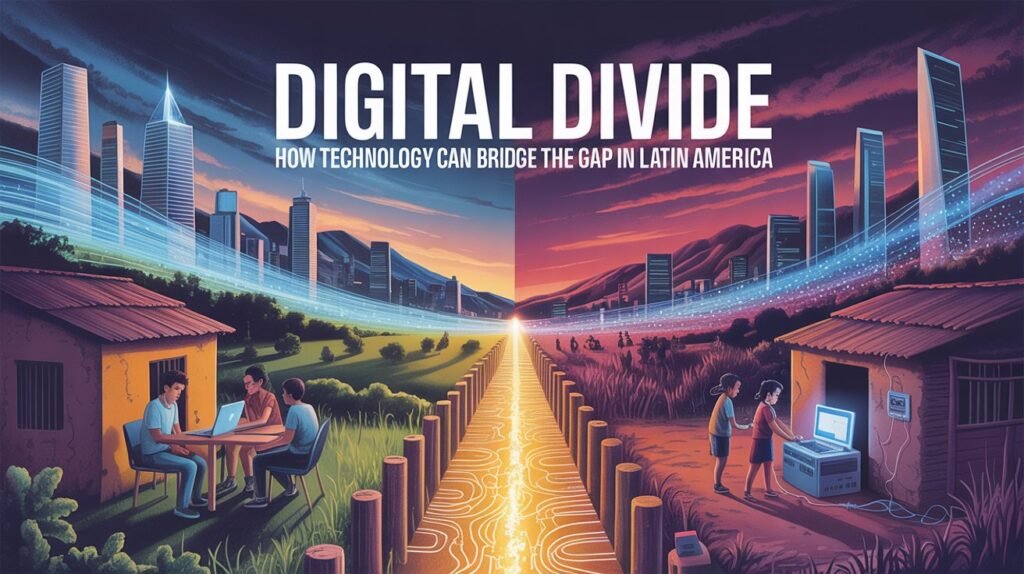
According to the statistics, 34% of the Latin American population lacks access to the internet. As a Latin American myself, when I look at the population numbers of Latin America, it becomes pretty evident to me that this is a huge number.
Sí, la brecha es enorme (the gap is massive), and the only thing that can bridge the gap is technology itself.
How, exactly? That we will talk in detail today. So, let us get into it.
Digital Divide in Technology and Its Challenges
Digital divide is a term that refers to the disparity between people who have access to the internet and those who don’t. In simple words, organizations and governments use it to measure the difference, so that they can lay out a plan to decrease the difference. And it makes sense!
Since the pandemic, we, as humans, have realized the importance of the internet. Everything was shut down, and we literally had nothing to do apart from staying online and doing activities on the internet such as browsing social media, buying groceries, talking to our loves, and more. It became super essential.
Having said that, there lie some challenges when we specifically talk about the Latin Americans. From what I have observed, only a few of them in a dataset are digitally literate. In simple words, they don’t know how to use digital devices in their daily lives. The first problem is that they don’t even have access to the internet, and those who do have access don’t know how to properly utilize it for personal and professional use. So, it is a big problem.
That digital illiteracy leads to slow economic and educational growth, especially in this current age when we rely heavily on the internet. ¿Cuál es entonces la solución? (What is the solution then?) We will come down to it shortly, but let me elaborate a bit more on why it is important to eradicate the digital divide.
Importance of Minimizing The Digital Divide
There are multiple reasons that stress on reducing the digital divide. Let me walk you through them:
First things first, it creates more job opportunities. Let me explain: we have moved from the industrial revolution to the blue industry. The blue industry basically relies on technology and the internet. It creates more room for growth. How? By giving people more to explore, and by connecting the world.
Imagine you want to buy a car. Now, if you were living in the 80s, you would have had far fewer resources to get information about the car, and making a decision would have been more difficult. Fast-forward it to the 21st century, things are different.
You have YouTube reviews, detailed blogs, forums, and more to make a sound decision. You will likely buy the car knowing that it is reliable, satisfied after having done your research. When you buy a car, it indirectly generate more jobs. This is how it works.
That is exactly why some internet providers in the US empower the audience by providing them with everything necessary to make the purchase. For example, when I moved to the US, I knew little about this new place, and getting internet was tough. But thanks to Spectrum Servicio al Cliente, I was able to get find help and get the right internet plan all in my own native language (Spanish).
Another key reason to minimize the digital divide is education. Let me elaborate on that, too: I am a professional digital marketer, and I am self-taught. From setting up marketing campaigns to writing copy, I learned it all via the internet. YouTube is one of the greatest resources when it comes to learning, and only when someone is digitally literate can they utilize the YouTube capacity to the fullest. So, it comes to that.
Then this education results in reducing the socioeconomic differences. How? People learn new skills, and then they offer that to the wide audience of buyers on the freelance platforms. This, in turn, improves the overall socioeconomic state of a country.
So, all in all, in this current age, the internet is of utmost importance if a nation wants to excel.
Solutions for Bridging Technology Gap
It starts with you. I mean, the people.
When people have the need and willingness to change, then the chain starts. Once people show interest, then the relevant bodies across the spectrum take an interest.
The chain looks something like this: people show interest, then the Government lays out policies that can help people achieve their needs.
Once the government is interested in solving the policy, private organizations act as a catalyst to achieve the goals. The infrastructure is laid which results in people getting access to a better quality of the services and overall better resources.
Now, at the end, the ball is in your court. Do you want to see the change? If you answered yes, entonces sucederá (then it will happen).
Want more to read? Visit dDooks.
