


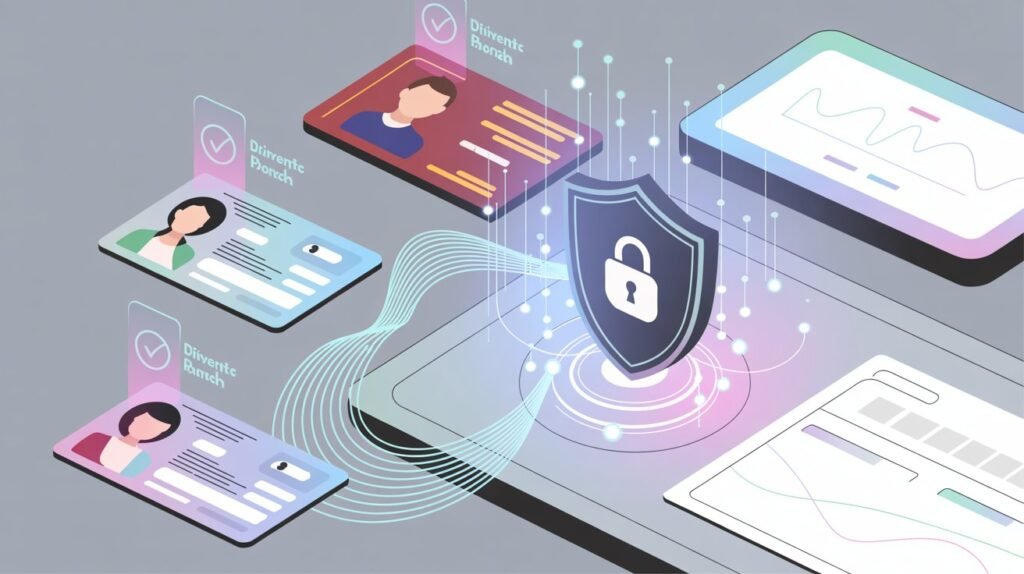
In today’s world, almost every bank, fintech, and online business needs to verify the customer’s identity before providing any service. The process is called KYC, meaning ‘Know Your Customer.’ It allows businesses to protect themselves from fraud, crime, and money laundering. It helps them remain on the right side of the law as well.
However, KYC is not an easy task. There are thousands of people who upload documents like Aadhaar cards, PAN cards, driving licenses, bank statements, and address proofs on the portal every day. It requires a considerable amount of time to check all these documents manually. It also raises the chances of error. Fraudsters also make very intelligent fraudulent documents.
As a result of all these factors, businesses today require a quicker and more intelligent method for identifying fraudulent activity. It is at this stage that Document AI proves very useful.
Within this blog, we will discuss ways Document AI enhances fraud prevention capabilities within KYC and onboarding and why it represents a new normal within the sphere of online businesses and banks. We will also discuss ways to document AI tools for AML to make compliance more convenient and better.
It should begin with simple words.
What Is Document AI?
Document AI refers to the use of artificial intelligence for document reading, understanding, and verification. It acts as a virtual brain with capabilities and functions that include:
- Read text from documents
- Understand the meaning
- Check if the document is original
- Compare information
- Detect signs of fraud
- Spot errors and mismatches
You can visualize Document AI as an extremely fast and extremely intelligent assistant who can analyze thousands of documents within seconds and flag anything unusual.
Document AI today finds applications in banking, insurance, fintech, and logistics, as well as government services.
Why Document AI Is Important for KYC and Onboarding
KYC stands as the very first step within a customer onboarding process. Having a slow customer onboarding process leads to frustrated customers abandoning a business. Faster customer onboarding may lead to fraudsters getting into a business.
Document AI remedies this issue. It ensures that document processing becomes extremely rapid and extremely secure.
Below are reasons why businesses nowadays favour Document AI for KYC:
- It operates 24/7
- It eliminates human error.
- It detects fraud early
- It ensures compliance with the law more easily.
- It reduces operational costs
- It enhances customer onboarding
- It reduces costs associated
For banks and fintechs, it is a major advantage because they have to comply with very strict rules under AML. It is because they prefer using document AI AML tools.
How Document AI Enhances Fraud Detection
Scammers employ various tricks. Fraudsters alter names, edit photos, and replace or upload numbers with similar documents. At times, they will make use of stolen identities.
Document AI prevents all these tricks with the help of advanced technology.
We will learn it with very simple steps.
Automatic Detection for Counterfeit Documents
The Document AI system can detect proof of fraud under these conditions:
- Font Variations
- Incorrect alignment
- Unusual shadows
- Censoring regions
- Incorrect Logos
- Lacking security features
It can also detect if Photoshop or editing software has been used on an image. It thus decreases fraudulent acts within KYC. Also, it constitutes one of the most efficient phases of document fraud detection.
Matching Customer Information Across Documents
Fraudsters often have documents with various information. For instance:
- Name discrepancy
- Address Mismatch
- Date of Birth discrepancy
Document AI scans all documents uploaded and reports anything that does not correspond. It assists companies in avoiding potentially hazardous customers.
Face Matching and Liveness Detection
At present, many onboarding procedures will require a selfie or a short video. Document AI matches a photo on an ID proof with a selfie to make sure it is the same person. It also checks for liveness. Liveness here confirms that it is a human and not a photo or mask. It would be extremely useful for preventing identity fraud.
Identifies Duplicate and Reused Documents
Some fraudsters duplicate a single document and generate multiple accounts.
Document AI can identify:
- Duplicate PAN cards
- Re-used Aadhaar cards
- Multiple onboarding processes for the same person
- Multiple accounts with slight variations
Spots Risky Patterns Using AML Intelligence
Document AI is also used in document AI AML systems. AML stands for Anti-Money Laundering. It detects patterns such as:
- Similar documents
- Document
- High-risk customers
- Fake identities
Document AI functions together with AML tools to provide an overall fraud review.
Accelerates Verification Process to Lower Drop-off Rates
It frustrates customers waiting for lengthy verification. Slow onboarding leads to missing customers. Document AI can carry out verification within seconds. It enables a smooth and rapid process. The customer experience would be excellent, and the businesses would be secured.
How Banks and Fintechs Apply Document AI in Real-World Scenarios
Below are some simple examples from real life:
Example 1: Opening of a Bank Account
A customer needs to upload their PAN card and Aadhaar.
Document AI checks:
- If the Aadhaar card is genuine
- If PAN is valid
- If the documents are for the same person
- If the photo matches
- If the address is correct
It will take mere minutes for the account to be approved if everything goes as it should.
Example 2: Digital Loan Application
Scammers usually put up false income proofs or bank statements.
Document AI can:
- Look for editing marks
- Compare financial numbers
- Identify pseudo-formats
- Validate signatures
It safeguards lenders against lending money to either risky subjects or fraudsters.
Example 3: Insurance Onboarding
The insurance corporations employ Document AI in examining:
- Identity proofs
- Address proofs
- Age documents
- Income documents
It helps them avoid fake claims later.
How Document Fraud Detection Works Step by Step
Detection of document fraud requires several steps:
- Document Upload: A document, like an ID or address proof, is uploaded.
- OCR Extraction: The system can read all text.
- Image Analysis: It analyses illumination, boundaries, font designs, layout, and graphics.
- Data Validation: It also checks if the information fits with existing documents.
- Database Verification: The data is then verified using government or internal databases.
- Fraud Scoring: It calculates a risk score.
- Flagging: Suspicious ones are looked at. It makes the whole process very efficient.
Why Document AI Is the Future of KYC and AML
More companies are switching to Document AI because:
- Fraud rates are rising
- Digital onboarding is on the rise
- Manual review is too slow
- Human Evaluation vs. Fake documents are getting smarter
- Customers want fast onboarding
- Regulations are becoming more and more strict.
Document AI isn’t a tool but will soon be a necessity. It will be an essential tool for smooth and secure onboarding.
Advantages for Organisations
- Faster onboarding
- Lower cost
- Higher Accuracy
- Less manual labour
- Strengthening security
- Improved customer experience
- Effective AML Protection
Document AI also assists businesses in abiding by compliance laws stress-free.
Conclusion
In short, fraud just keeps getting cleverer, so businesses will need cleverer tools. Document AI just so happens to be that tool. It ensures that KYC and onboarding processes are secure, efficient, and reliable. By using excellent document fraud detection and document AI AML solutions, businesses can safeguard against threats like identity fraud, financial fraud, and bad customers.
Want more to read? Visit dDooks.
