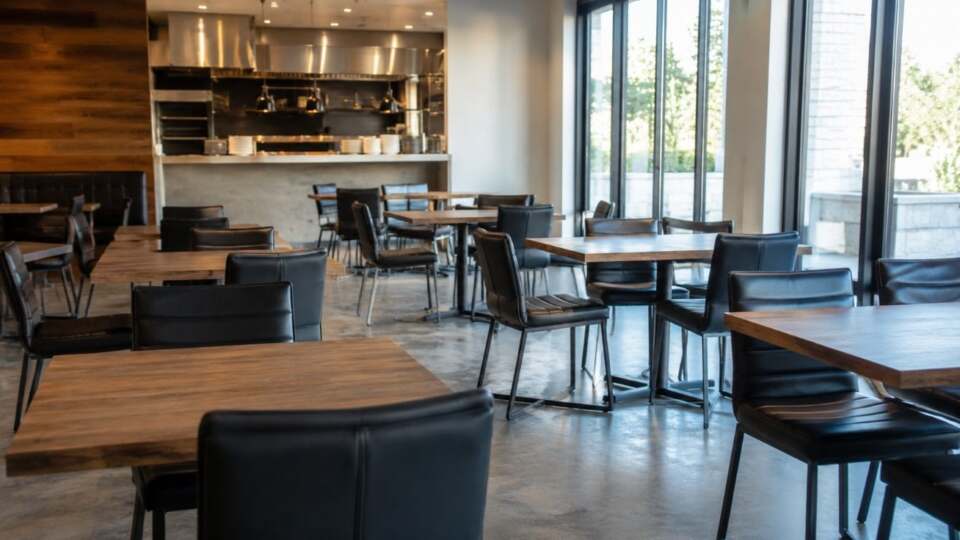
The lease is signed, the menu is half written, and the kitchen quote came in higher than expected. Somewhere in that flurry, a first-time owner draws up a budget that covers the range, the walk-in, the POS, and the deposit, then treats the dining room as something to be sorted later with whatever is left over. Later arrives, and the money does not.
Furniture is the cost that hides in plain sight. It rarely makes the napkin-math list, yet it has to seat every paying guest from the first night forward, and an empty floor earns nothing while you wait six weeks for chairs. Owners who price the room early, the way they price the hood and the line, build a steadier opening, and many of them start by browsing restaurant chairs and tables for sale before the contractor has even broken ground.
Where the Money Actually Goes
Opening a restaurant is expensive in ways that surprise people who have only run the numbers once. Furniture, fixtures, and equipment, the line that accountants shorten to FF&E, commonly swallows 30 to 40 percent of the hard-cost budget, with construction and leasehold work taking most of the rest. Within that slice, seating and tables are not a rounding error. Owners routinely spend tens of thousands of dollars on chairs, tables, booths, and stools alone, and a mid-size dining room can clear $80,000 once every seat is accounted for.
That figure tends to land as a shock because the kitchen got all the early attention. Equipment feels concrete: you can picture the fryer. The dining room stays abstract until the contractor hands back the keys and the space is suddenly, loudly empty.
Why It Slips Off the Spreadsheet
Two habits push furniture to the bottom of the list. The first is sequencing. Owners think in build order, kitchen first, then service, then decor, so the chairs feel like a problem for next month, even though lead times say otherwise. The second is the showroom illusion: a single sample chair costs less than dinner for two, so the brain quietly assumes the whole room will be cheap. Multiply that chair by 90 covers and the illusion collapses.
Do Read: Smart Ways to Simplify Your Financial Life
Lead time is the part that punishes the unprepared. Custom upholstery and finishes can run six to ten weeks from approval to delivery, and a soft-opening date does not move just because the seating is stuck in production. Order late and you either delay revenue or seat guests on whatever a local store can ship overnight, which rarely matches the room you spent a year imagining.
The Cost That Keeps Costing
There is a second number behind the sticker price, and it is the one that separates owners who buy once from owners who buy twice. Residential-grade furniture bought to save money up front tends to loosen, crack, or tear under commercial traffic within a year or two, and replacing it mid-service is far more expensive than buying it correctly the first time. The honest way to read a quote is through total cost of ownership, the full bill across the furniture’s working life, rather than the price on the invoice.
A welded steel frame with commercial-grade upholstery may cost more per chair, but spread that cost across seven or eight years of nightly use and the per-year figure drops below the cost of the cheap chair you replace every eighteen months. Tax treatment helps here, too. Furniture is a capital asset, and the slow write-down of its value, the accountant’s depreciation, lets the cost land across several years rather than all at once.
Pricing the Room Before You Build It
The owners who avoid the scramble do a handful of unglamorous things early, while there is still time to act on the numbers.
- Count covers first, then multiply by a realistic per-seat budget rather than guessing a lump sum.
- Get furniture quotes the same week you get kitchen quotes, not after the build.
- Ask every supplier for lead times in writing and back-date your order from opening day.
- Separate the want list from the seat list, since decor can wait but chairs cannot.
- Price commercial-grade and residential side by side, then divide each by its expected years of service.
Run those five steps and the dining room stops being the surprise at the end of the budget. It becomes a line you planned, sized, and ordered on time.
Buying in Volume Changes the Arithmetic
Furniture rewards the operator who buys the whole room at once. Suppliers price a matched order of booths, tables, and chairs more favorably than a trickle of small purchases, and consolidating production and shipping into a single coordinated delivery trims both cost and lead time. That advantage has a name, economies of scale, and it is one of the few levers a new owner can pull without sacrificing quality.
Volume also buys consistency. A floor furnished from one order shares the same finish, seat height, and wood tone, and reads as a designed room rather than a collection of close-enough pieces. Phased deliveries can still spread the cash outlay if opening capital is tight, so the choice is not always between paying everything now and settling for less. Plan the room as one purchase and the per-seat cost falls while the dining room gains the coherence that guests register before they have read a word of the menu.
The Line Item That Greets Every Guest
Owners agonize over the espresso machine that a fraction of guests will ever notice, and underplan the chair that touches 100% of them. Every person who walks in sits down, and the first physical impression of the business is made by furniture, not by the equipment hidden behind the kitchen pass. That is the quiet advantage of the dining room budget: it is the part of the build the customer actually feels.
Treat seating as a forecasted, scheduled, volume-purchased asset and it stops being the cost that ambushes the opening. Treat it as an afterthought and it shows up twice, once as a delayed launch and again as a replacement bill eighteen months later. The first high-cost new owners forget is also the first thing every guest sits in, and that coincidence is worth planning around long before the contractor hands back the keys.
Want more to read? Visit dDooks