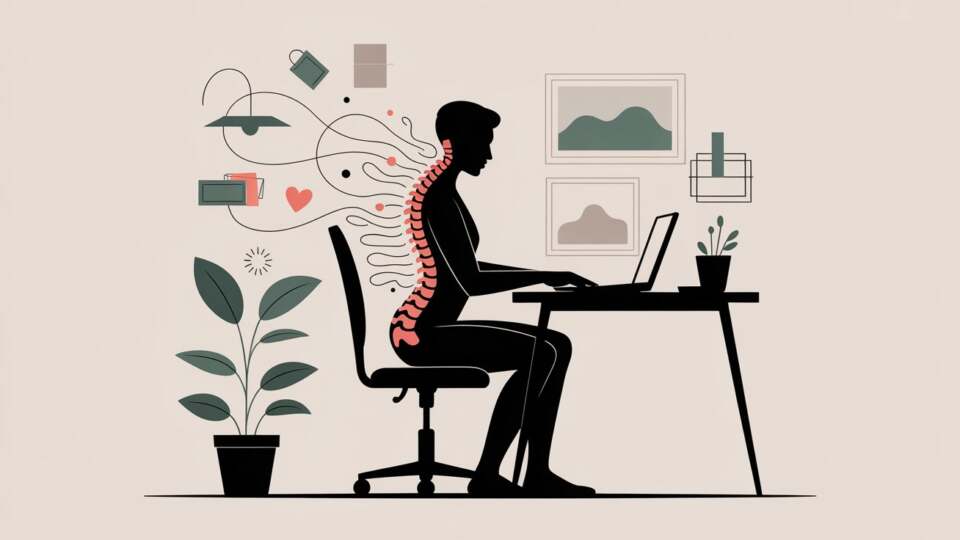
Your spine has been trying to tell you something for years. It whispers during that afternoon slump, shouts through that persistent ache between your shoulder blades, and sends urgent messages via that numb feeling in your legs after a long meeting. The question isn’t whether your body is communicating. It’s whether anyone is listening.
For decades, the design world operated under a curious assumption: that humans should adapt to furniture, not the other way around. We contorted ourselves into rigid wooden chairs, perched on stools that ignored our curves, and accepted discomfort as the price of getting work done. But something remarkable happens when design finally starts listening to what your body has been saying all along. The conversation between your physical comfort and your mental output becomes not just possible, but transformative.
The Language Your Body Speaks
Your spine communicates in a language more ancient than words. It uses tension, release, pressure, and ease to signal what’s working and what isn’t. When you sink into a chair that supports your natural curves, your nervous system registers safety. Stress hormones decrease. Blood flow improves. Your brain, no longer allocating resources to manage discomfort, suddenly has more energy available for creative thinking and problem-solving.
This isn’t metaphorical. Studies have shown that physical discomfort creates a cognitive load that directly impacts performance. Your brain is essentially doing two jobs: the work you’re being paid for and the work of managing your body’s distress signals. When furniture design acknowledges this reality and responds accordingly, something almost magical occurs. You stop fighting your environment and start collaborating with it.
When Design Becomes a Dialogue
The revolution in workplace seating didn’t happen because designers suddenly became more creative. It happened because they started asking different questions. Instead of “How do we make people sit properly?” they began asking “What does the human body actually need?” This shift from prescription to inquiry changed everything.
Do Read: Precision Work That Restores Strength: A Closer Look at Modern Solutions for Nerve Compression
Ergonomic office chairs represent more than just comfortable seating. They embody a fundamental respect for human biology. These designs acknowledge that your spine has a natural S-curve that deserves support, that your arms shouldn’t dangle in space, and that circulation matters as much during work as it does during exercise. When design listens to these biological truths rather than imposing arbitrary standards, the results speak for themselves.
The Productivity Paradox Nobody Talks About
Here’s something counterintuitive: the more comfortable you become, the less you think about your body, and the more mental energy you have for everything else. It’s a productivity paradox that challenges our cultural narrative about struggle and achievement. We’ve been taught that discomfort builds character, that sitting up straight requires effort, and that comfort makes us soft or lazy.
But your body tells a different story. When your physical needs are met, when your chair supports rather than challenges you, something unexpected happens. You enter flow states more easily. Your focus sharpens. Those creative breakthroughs that seemed impossible at hour three of sitting suddenly become accessible at hour seven. The conversation between your spine and your productivity isn’t about pushing through pain. It’s about removing the barriers that pain creates.
The Ripple Effect of Being Heard
When design listens to your body’s needs, the benefits extend far beyond the workday. People who spend their days in supportive seating report better sleep, fewer headaches, and more energy for activities they love after work. It’s as if their bodies, finally feeling acknowledged during work hours, become more generous with their resources during personal time.
This ripple effect touches relationships too. When you’re not exhausted from battling discomfort all day, you have more patience for your family, more enthusiasm for hobbies, and more capacity for joy. The conversation between your spine and your productivity ultimately becomes a conversation about quality of life. Design that listens to your body’s wisdom creates space for you to listen to your own needs more broadly.
The Evolution Continues
The story of supportive workplace design isn’t finished. Designers continue refining their ability to hear what bodies need. Adjustable lumbar support that moves with you throughout the day. Seat depths that accommodate different leg lengths. Armrests that don’t force your shoulders into unnatural positions. Each innovation represents design getting better at listening.
What’s emerging is a more nuanced understanding: there’s no single perfect position for the human body. Your spine doesn’t want to be locked into place. It wants options, movement, and the freedom to shift. The best design acknowledges this, creating furniture that supports multiple positions throughout the day. It’s a conversation, not a mandate.
Reclaiming Your Attention
Perhaps the most profound gift of design that listens is the attention it gives back to you. When you’re not constantly adjusting, shifting, or managing discomfort, you reclaim thousands of micro-moments previously spent negotiating with your environment. These moments add up to hours, days, and eventually years of additional mental clarity and focus.
Think about what you could do with that reclaimed attention. The projects you could complete, the ideas you could develop, the presence you could bring to your work and life. This isn’t about squeezing more productivity from exhausted bodies. It’s about removing the obstacles that prevent you from accessing your natural capacity.
The Invitation
Your spine has been speaking to you all along, waiting for someone to listen. When design finally does, when furniture acknowledges the wisdom your body carries, something fundamental shifts. The relationship between where you sit and what you accomplish transforms from adversarial to supportive. Your body becomes an ally in your work rather than an obstacle to overcome.
The conversation between your spine and your productivity isn’t one-sided. As design listens to your body, you might find yourself listening more carefully too. To the signals that say it’s time to stand, to move, to stretch. To the wisdom that knows the difference between productive discomfort and pointless pain. When design respects your biology, it creates space for you to respect it too, and that changes everything.
Want more to read? Visit dDooks.