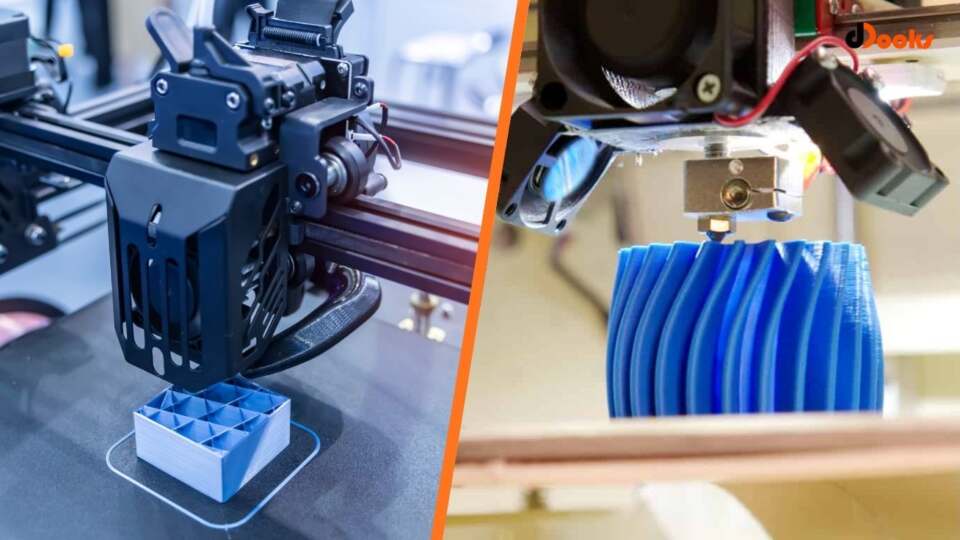
Choosing a professional 3D printing service can make a big difference in how your ideas turn into real products. Whether you are creating a prototype, a custom part, or a small production run, the right provider helps you save time, reduce mistakes, and get better results. A professional service does more than just print a file. They guide you on materials, design choices, quality checks, and finishing options to make sure your parts work and look the way you expect. Knowing what to expect helps you choose the right partner and get the most value from your 3D printing project.
Core Capabilities of a Professional 3D Printing Service
Not every operation labeling itself a professional 3D printing service provider runs with the rigor your timeline demands. The Bay Area’s relentless innovation cycle means iteration happens fast and deadlines don’t bend. San Francisco specifically? It’s become a proving ground where engineering squads, scrappy startups, and established manufacturers constantly test the limits of rapid prototyping and custom builds. You’ve got this unique concentration of tech firms and design shops creating intense pressure—speed matters, but precision can’t slip.
Anyone working in this environment knows that quality hiccups or schedule slips can torpedo product launches and torch investor trust.
That’s exactly why, when evaluating 3d printing in San Francisco, you need to hold providers to the same non-negotiable benchmarks you’d demand anywhere: documented process controls, material traceability you can verify, and reliable post-processing. Being local doesn’t excuse mediocre work. Proximity means nothing when parts show up warped or fail dimensional checks.
Production-grade vs. print-on-demand shops
Genuine production facilities maintain tolerance targets and document calibration records like precision machine shops track tooling wear. You’re looking for evidence of statistical thinking—repeatability comes from method, not chance. Hunt for standard operating procedures covering material storage conditions, bed adhesion protocols, even humidity control. Finishing capabilities should stretch well beyond sure, we can sand that to encompass threaded inserts, vapor smoothing, assembly kitting—whatever your design demands.
Do Read: Compliance Challenges in Aviation and the Role of Software Solutions
Technology stack coverage in custom 3D printing services
A competent 3D printing service provider supports multiple processes because one technology never solves every problem. FDM cranks out tough prototypes and production fixtures fast. SLA gives you smooth surfaces and fine detail for presentation models or dental applications. SLS and MJF create robust nylon components with complex geometries minus support scarring—perfect for functional validation and limited production volumes. Metal printing (DMLS/SLM) becomes relevant when end-use performance requirements climb, though expect longer lead times. Large-format capability? Critical for tooling, molds, and display pieces that bust standard build envelope limits.
Material portfolio and real-world selection guidance
Thermoplastics span from basic PLA for concept visualization through engineering-grade nylon, polycarbonate, and TPU for functional testing. Carbon-fiber and glass-filled composites boost stiffness but increase nozzle wear and demand careful cooling management to prevent warping. Resin families now include tough, flexible, high-temperature, and biocompatible variants—each carrying tradeoffs in UV resistance and impact strength.
Metals like aluminum, stainless, and titanium open aerospace and medical possibilities but need serious post-processing know-how. Sustainable options—recycled filaments, bio-based resins—cut environmental impact, though mechanical consistency can vary between batches.Even cutting-edge equipment won’t save your project if intake processes are sloppy. Here’s what a rigorous project start should look like to prevent expensive do-overs before the printer even warms up.
Project Intake That Prevents Costly Reprints (Expect This Upfront)
Get this: roughly 20% of prints fail, which balloons your overall production timeline. That failure rate is unacceptable when you’re racing a launch deadline or need replacement components yesterday.
Design file readiness and manufacturability pre-check
Quality providers accept STEP files for dimensional precision and STL or 3MF for print-optimized geometry. Look for automated validation catching non-manifold edges, walls thinner than process minimums, and open surfaces that break slicing algorithms. A printability score should flag risks upfront—unsupported overhangs or internal voids that’ll trap uncured resin, for example.
DfAM guidance included with a professional 3D printing service
Build orientation strategy juggles part strength against surface quality and support removal effort. Capable providers recommend hole diameter tweaks for dimensional accuracy, suggest strategic ribbing or lattice lightweighting, and identify tolerance chains that’ll create assembly nightmares. They’ll also steer you on press-fit insert approaches versus thread-tapping decisions.
Security and IP protection for business customers
NDAs shouldn’t require negotiation—they’re baseline. Demand encrypted file transfers, restricted storage access, and transparent data retention policies. Domestic production reduces compliance headaches for ITAR or export-restricted designs, though offshore options might trim costs if IP sensitivity runs low.Once files are validated and risks surfaced, your next critical question emerges: what’s this actually going to cost, and why those numbers? Transparent pricing separates trustworthy shops from those burying you in surprise fees.
Lead Times, Scheduling, and Delivery You Can Plan Around
Print duration varies wildly based on printer speed and model size—expect anywhere from 15 to 50 hours.
Realistic timelines across technologies
FDM can ship overnight for compact parts. SLA typically delivers within two days. SLS and MJF batch operations need three to five days since providers optimize by filling build chambers completely. Metal printing extends to a week-plus once you account for stress relief heat treatment and support structure removal.
Service-level options that top 3D printing service providers offer
Standard queues balance economics with speed. Expedited service bumps you up the priority list but increases cost proportionally. Emergency overnight production exists for crisis situations, though material and finish options become limited. Capacity reservations make strategic sense for product launches when you’ve forecasted incoming volume.Quick turnaround delivers zero value if parts arrive with dimensional drift or surface defects. Let’s examine quality systems ensuring consistent, production-worthy results across repeat orders.
Modern Add-Ons and Innovation Leading Providers Offer
AI-powered printability analysis flags thin-wall risks and unsupported overhangs automatically, eliminating manual review bottlenecks. Digital inventory platforms store your validated files securely and enable single-click reordering, wiping out version control confusion.
Mass customization workflows handle parametric variations where each unit differs slightly—personalized text, custom sizing, scan-fitted products. Hybrid manufacturing combines additive printing with CNC finishing for critical surfaces or leverages printed tooling for composite layup.Armed with this comprehensive picture of capabilities, you’re positioned to evaluate providers systematically instead of guessing. Use this framework to distinguish capable partners from those who’ll inflate budgets and blow schedules.
Common Questions About Professional 3D Printing Services
Do I need an STL or a STEP file for a professional 3D printing service?
STL handles most printing scenarios adequately, but STEP preserves exact dimensional data and curve geometry, cutting translation errors on precision-critical components.
Which 3D printing process is best for end-use parts: SLS, MJF, SLA, or FDM?
SLS and MJF generate the strongest isotropic nylon components; FDM offers broader material selection; SLA excels at intricate detail but brittleness can be limiting.
What tolerances can a professional 3D printing service provider realistically hold?
Professional 3D printing typically holds about ±0.1–0.3 mm depending on process and part size: industrial FDM ~±0.2–0.3 mm, SLA ~±0.1–0.2 mm, and MJF ~±0.2 mm (≈±0.2% of length). Tighter tolerances usually need machining or manual fitting.
Making Smart Choices in 3D Printing Partnerships
Choosing a professional 3D printing service ultimately hinges on verifiable process maturity, pricing transparency, and demonstrated repeatability. The providers who document their procedures, deliver DfAM consultation upfront, and back their work with clear reprint policies will save you both time and budget over the long haul. Start with a benchmark component, establish acceptance criteria collaboratively, and scale from validation—rushing into volume production before quality confirmation only multiplies downstream problems. The right partnership transforms your provider into an engineering team extension, not just another vendor processing orders.
Want more to read? Visit dDooks